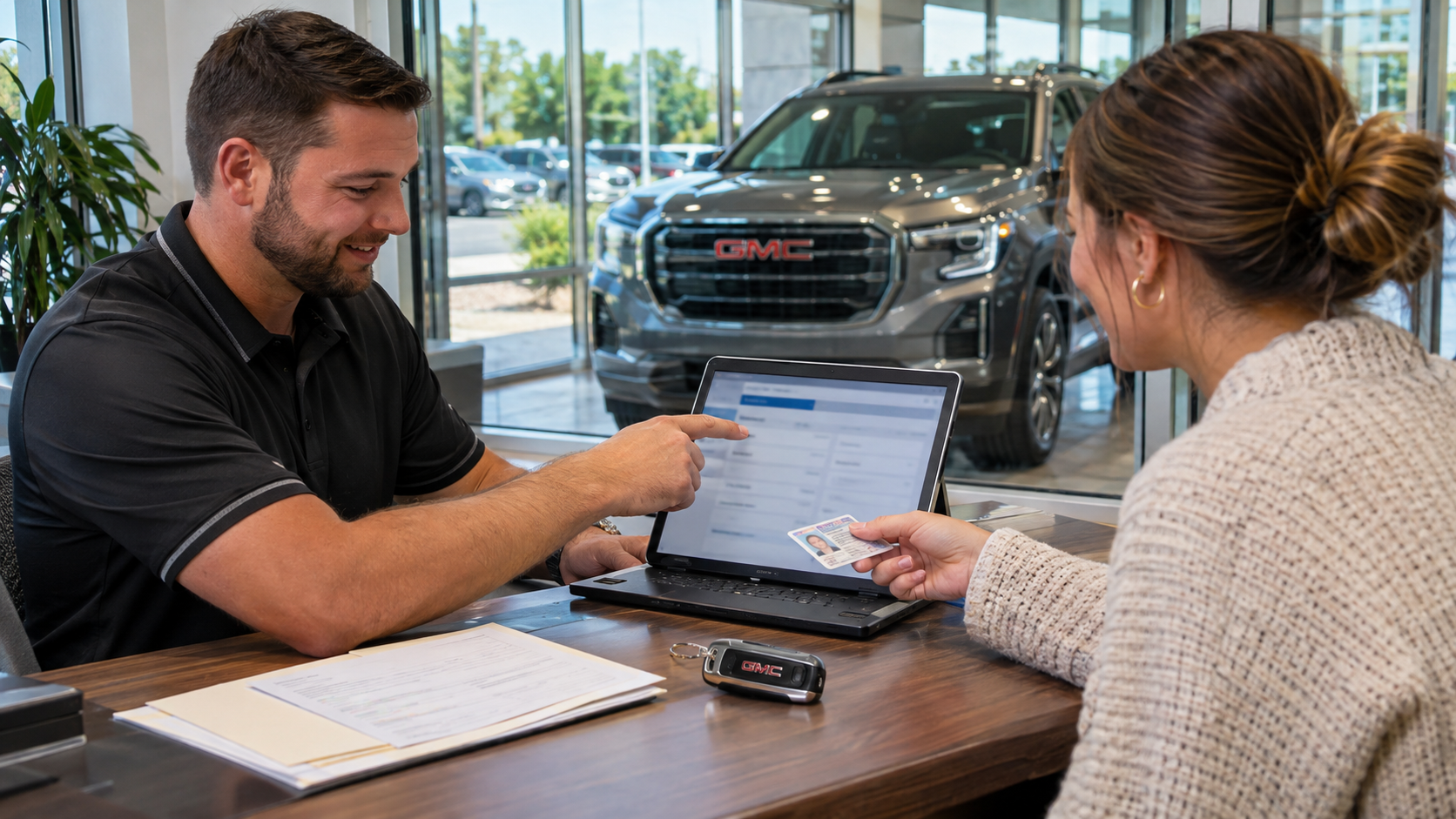
GMC financing preapproval is worth exploring before you visit Vince's GMC in Burlington, Colorado, to shop for your next vehicle. You can prepare for the application process while comparing a new GMC Sierra, a new Terrain, or a used vehicle. What happens after you apply? A lender reviews your information and may request further details before offering specific loan terms. Knowing the steps can make your dealership visit more productive. How GMC Financing Preapproval Works Preapproval gives you an early view of possible financing, subject to lender review. Prequalification is another preliminary step, and lenders may use the two terms differently. Neither should be treated as a signed loan agreement. Therefore, read the disclosures attached to the application before submitting it. The process begins when you provide identifying details, employment information, and financial information requested by the application. Next, a lender evaluates the submission against its lending criteria. The lender may respond with an initial decision, request supporting records, or require additional review. After you select a GMC, the vehicle's price and details may shape the final terms. Will applying affect your credit score? It may, because a lender could use a hard credit inquiry. Some preliminary qualification tools use soft inquiries instead. However, the inquiry type must be confirmed in the terms of the specific application. Do not assume every online financing form uses the same procedure. Even with a preliminary approval, final financing can require identity checks, income verification, and confirmation of vehicle details. Read all financing documents before agreeing to a loan. That way, the final obligation matches the terms you reviewed. Information and Documents to Prepare A complete application starts with accurate information. For this reason, lenders need enough detail to verify your identity and assess whether the proposed payments are affordable. They may request supporting documents during the first application or later in the process. Therefore, gathering common records beforehand can prevent avoidable delays. What should you keep ready? These are common examples. However, an individual lender may ask for different items: Identification and residence: Keep a current government-issued ID and your address history available. A lender may request proof of residence. Employment and income: Know your employer information and income amounts. Recent pay statements or other income records may be requested. Current obligations: Be ready to provide requested housing costs and existing debt information accurately. These details inform the lender's review. Vehicle and trade details: If you have selected a GMC, note its price and identifying information. For a trade, have ownership and payoff details ready. Additionally, some applicants earn income through self-employment or several sources. In that case, the lender may request different records to verify earnings. Do not submit sensitive documents through an unverified email or message. Instead, ask the finance team which secure submission method to use. Before beginning, review your entries for accuracy. For example, small mistakes in names, dates, or income figures can create follow-up questions. Also, keep copies of any disclosures or loan terms you receive for later comparison. Financing New and Used GMC Vehicles Still, new and used vehicles can qualify for different lending terms. A lender reviews the applicant's finances alongside details about the vehicle securing the loan. Therefore, approval for one GMC does not guarantee identical terms for another. Vehicle price, age, mileage, and assessed value may contribute to the final decision. For example, consider a new GMC Terrain and a used Terrain with several years of road use. Their prices may differ, but purchase price is only one part of the loan evaluation. A lender might apply different loan lengths based on the used vehicle's age and mileage. Any specific restriction must come from the lender, not an assumption about the model. Likewise, the same reasoning applies when comparing a new GMC Sierra with a preowned truck. Consequently, a higher purchase price may require borrowing more money after your down payment and trade value. In addition, an existing loan on your trade may change the amount you need to finance. Ask for a breakdown showing the trade allowance, payoff, taxes, fees, and resulting loan amount. Should you choose the vehicle before requesting financing? You can start exploring financing first, but final terms may require a selected vehicle. That makes preliminary research useful without treating an estimate as a guarantee. Once you narrow the models, review the specific numbers for each GMC. Reviewing Loan Terms Before Making a Decision A monthly payment shows what comes due each month, but it does not show the full borrowing cost. Therefore, to evaluate an offer, examine the amount financed, annual percentage rate, loan length, and total payments. The APR reflects the annual cost of credit, including certain finance charges. Therefore, it provides a more complete comparison than the interest rate alone. How can two offers have different monthly payments? For example, a longer repayment period spreads the principal across more payments. That can reduce each payment while increasing total interest paid. Likewise, a larger down payment reduces the amount borrowed, assuming the remaining loan terms stay the same. Review these figures together before choosing an offer: Amount financed: Check how price, down payment, trade value, taxes, fees, and trade payoff shape the loan principal. APR and loan term: Compare the annual borrowing cost and number of payments, not the monthly figure alone. Total of payments: Review what you would pay across the full loan term and identify any optional products included. Also, read the contract for late-payment terms and any applicable prepayment provisions. If a figure seems unclear, request an explanation before signing. The Vince's GMC finance department is a relevant next stop for discussing application questions and available financing options. Rates and decisions are subject to lender review and the applicable offer terms. Preparing for Your Finance Discussion in Burlington Before you contact the dealership, you should know what you want to finance and which documents may be needed. Start with a realistic vehicle price range and a monthly amount you can manage. Then compare the total loan cost, not only the payment you see first. Can you begin before arriving in Burlington? Vince's GMC provides an online preapproval page for shoppers ready to begin. Review the application disclosures, confirm what information is required, and submit details only through the dealership's official website. If you have questions first, use the finance department page to find the dealership's contact options. Additionally, bring any requested records when you visit. Additionally, note questions about down payments, trade equity, loan length, or financing a used GMC. Ask the team to explain any terms you do not recognize before you agree to them. As a result, clear answers now make it easier to compare your options later. Whether you are considering a Sierra for hauling or a Terrain for daily trips, financing should fit your budget. Therefore, prepare your information, explore the application, and discuss the final figures with Vince's GMC in Burlington, Colorado.

GMC Sierra vs GMC Terrain for Work and Daily Driving
GMC Sierra vs GMC Terrain presents a familiar choice: an open-bed pickup or a compact SUV with enclosed storage. A pickup and a compact SUV solve different transportation problems. The Sierra provides an open bed and multiple cab and engine choices. In contrast, the Terrain keeps belongings inside an enclosed cargo area behind its passenger seats. Both serve trips around Burlington, Colorado, but their designs shape what each can handle. Before selecting either GMC, consider trailer weight, cargo dimensions, passenger space, and your usual routes. How Pickup and SUV Construction Changes What You Can Carry The GMC Sierra 1500 uses a separate pickup bed behind the cab. This layout provides a space for materials that might not fit through an SUV liftgate. You can load bulky tools, landscaping supplies, or equipment without bringing them into the passenger compartment. However, an open bed leaves cargo exposed unless you add suitable protection. You must also secure loads to prevent shifting or loss during travel. The Terrain places its storage area directly behind the second row. A liftgate opens to an enclosed space for groceries, bags, or sporting goods. This design keeps smaller belongings out of the elements when the liftgate closes. Still, the roof and cargo opening limit the height and shape of items you can load. Long objects may require folding part of the rear seat. So, which body style fits your plans? Start with the shape, weight, and frequency of your largest loads. A truck bed makes sense when you transport bulky materials that are difficult to fit inside a cabin. An SUV makes sense when protected storage and easy access to smaller items matter more. Neither layout replaces the need to check weight limits and secure cargo correctly. Towing Ratings and Why the Details Matter Towing involves more than connecting a trailer to a hitch. The trailer places weight on the hitch and adds resistance while accelerating, turning, and braking. Therefore, you need a vehicle with an adequate tow rating and the proper equipment. You must also account for passengers and anything carried inside the vehicle. For the 2026 Sierra 1500, GMC lists available maximum diesel towing of up to 13,300 pounds. That figure applies to specific configurations, not every Sierra. The 2027 Terrain lists up to 1,500 pounds when properly equipped. Its available all-wheel-drive configurations support light trailering, but the exact limit must match the vehicle's equipment. For either GMC, consult the owner's manual and the vehicle-specific rating before towing. A useful towing checklist starts with three measurements: Loaded trailer weight: Include the trailer, fuel, water, equipment, and anything else it carries before checking the tow rating. Tongue weight: Account for the downward force at the hitch because it contributes to the vehicle's carrying load. Vehicle load: Include people, luggage, and accessories because these also count toward applicable weight limits. If towing forms a regular part of your plans, Sierra configurations provide a wider range of trailer choices. However, a lightly loaded utility trailer may fall within a properly equipped Terrain's limits. Match the actual trailer and equipment to the specific GMC before making a decision. Cargo Space, Loading Access, and Storage Protection Cargo volume tells only part of the story. The Terrain offers up to 29.8 cubic feet behind its second row. Fold the rear seats, and GMC lists up to 63.5 cubic feet. However, those figures describe interior volume, not the dimensions of every object that will fit. Measure the cargo opening and the length of any large item before relying on the published volume. The Sierra offers different bed lengths across its configurations. Its open design makes tall or awkward materials easier to position. However, bed length, width between wheel wells, payload, and tie-down locations still matter. A large object may fit inside the bed but exceed the vehicle's permitted load weight. Likewise, loose material needs safe restraint even when the bed walls surround it. Think about what happens after you arrive. With Terrain, you can lift bags from an enclosed compartment and close the hatch. With Sierra, you may need to lower the tailgate, remove straps, or uncover stored equipment. In return, a pickup bed provides space for items you would not want inside a carpeted cabin. For Burlington errands, road trips, or outdoor gear, list your three largest regular loads. Check their dimensions and whether they need a covered storage area. That exercise will reveal more than a simple comparison of cargo figures. Passenger Room, Parking, and Daily Transportation Both GMC models transport passengers, but their interior arrangements differ. Terrain has two rows with seating for up to five. Its rear seats fold in a 60/40 split, expanding cargo room while retaining one rear seating position. Still, folding seats reduces the number of passengers you can carry at the same time. Sierra 1500 seating varies with the cab selected. A Crew Cab provides a larger rear seating area than a smaller cab layout. Therefore, shoppers transporting adults or child seats should inspect the exact truck configuration. Compare rear legroom, entry access, and how much space remains after fitting seats or travel bags. Exterior size also shapes the daily drive. Terrain measures about 181 inches long, making it shorter than a full-size Sierra 1500. This smaller footprint can simplify crowded parking areas and tight turns. Sierra's larger dimensions require more room, although its bed serves tasks a compact SUV cannot handle as easily. Fuel economy deserves its own check. Terrain uses a 1.5-liter turbocharged four-cylinder engine, while Sierra offers several engine choices. Those Sierra powertrains have different fuel consumption ratings. Instead of assuming one figure applies to every truck, compare the EPA estimates on the exact vehicles under consideration. Then weigh your weekly mileage against how much you need the pickup bed or towing equipment. Choosing the GMC That Fits Your Plans The most useful vehicle comparison begins with the tasks you cannot change. Start with your heaviest trailer, your largest cargo, and your usual passenger count. Then consider the miles you drive during a normal week. Together, these details show which design deserves a closer look. Use these starting points while comparing available vehicles: Look closely at Sierra when you need an open bed, transport large materials, or require trailer ratings beyond Terrain's limits. Look closely at Terrain when enclosed storage, five-passenger seating, and a smaller footprint suit your usual trips. Compare specific configurations when both seem suitable because cab style, drivetrain, towing equipment, and cargo dimensions can change the answer. A test drive adds another useful check. Bring the dimensions of any gear you transport and review vehicle-specific ratings before choosing a configuration. If you park in a garage, measure the available length and clearance. For trailers, verify the loaded weight and required hitch equipment before discussing a purchase. At Vince's GMC in Burlington, Colorado, you can review available Sierra and Terrain vehicles side by side. Explore current GMC inventory to narrow the selection, then examine the vehicles that match your transportation plans. The goal is a GMC that works for the trips you make and the loads you need to carry.