Blog / Burlington Chevrolet Dealer

What Is OnStar and How Does It Help Drivers Day to Day?

What is OnStar? For many GM drivers, it’s a connected vehicle system designed to support safety, convenience, and everyday driving situations through features that work both inside the vehicle and through mobile connectivity.

While many people recognize OnStar from emergency response commercials, modern OnStar services often extend beyond accident assistance alone. Depending on the vehicle and subscription plan, OnStar may also support remote access features, roadside assistance, vehicle diagnostics, navigation support, and connected app functionality that can become part of everyday ownership.

For some drivers, those features may feel unnecessary at first. For others, they can become useful during situations that happen more often than expected, including lockouts, flat tires, cold mornings, or long-distance travel.

What OnStar Actually Does

At its core, OnStar is designed to connect a GM vehicle to support services and connected technology systems.

That connection may allow drivers to access:

  • emergency assistance
  • roadside support
  • remote vehicle controls
  • navigation support
  • vehicle diagnostics
  • in-vehicle connectivity features

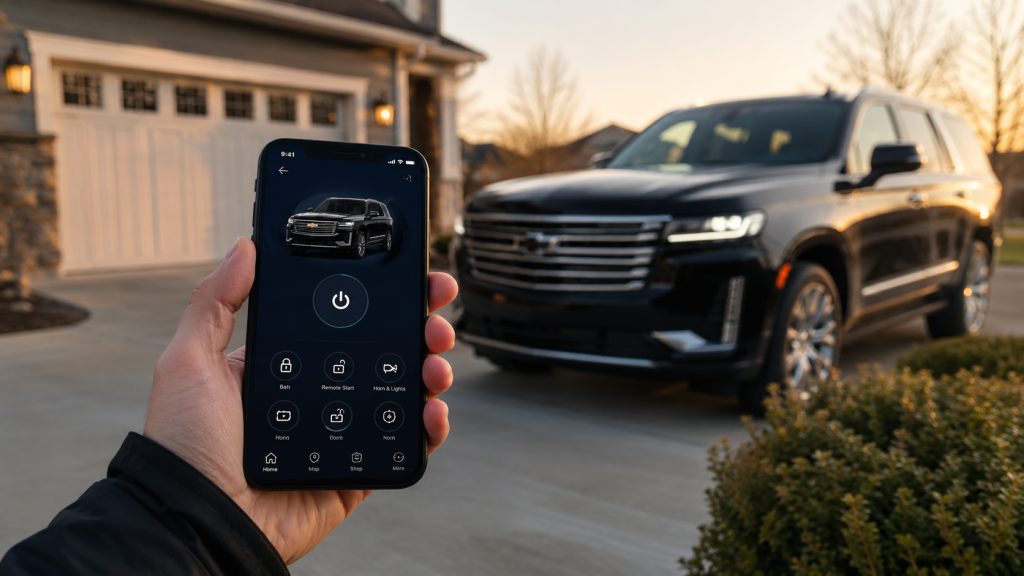
Modern GM vehicles may also connect OnStar functionality through a mobile app experience, allowing certain features to be accessed remotely depending on the vehicle and active services.

For many drivers, that’s where confusion often starts. Some people still associate OnStar only with emergency crash response, while newer systems may include multiple convenience and connectivity tools designed for everyday use.

How OnStar Works Inside the Vehicle

OnStar works through built-in vehicle hardware and connected communication systems that can link the vehicle with support networks and mobile services.

In some situations, the system may:

  • detect severe collisions
  • connect drivers with emergency personnel
  • provide roadside assistance access
  • support remote vehicle commands
  • relay diagnostic information

For example, automatic crash response systems may attempt to contact emergency support if a significant collision is detected. That functionality is one reason many drivers initially associate OnStar primarily with safety services.

At the same time, the system may also support less urgent ownership situations that happen more regularly during day-to-day driving.

Why Many Drivers Use OnStar Beyond Emergencies

One recurring pattern across driver discussions is that convenience features often become more valuable over time than owners initially expected.

Some drivers mention using OnStar related services for:

  • remote start during winter weather
  • unlocking doors after locking keys inside
  • checking vehicle health information
  • finding roadside assistance during travel
  • locating parked vehicles in large parking areas

For example, remote vehicle access may allow certain drivers to:

  • start the vehicle remotely
  • lock or unlock doors
  • check vehicle status through a connected app

How useful those features feel often depends on:

  • driving habits
  • climate
  • commute routines
  • travel frequency
  • family needs

A driver dealing with cold winters may value remote start differently than someone in a warmer climate. Similarly, parents with teen drivers may prioritize safety and location-based features differently than drivers focused mainly on commuting.

How OnStar May Support Different Driving Situations

Not every driver uses connected vehicle features the same way.

Daily Commuters

Drivers who spend significant time commuting may value:

  • navigation assistance
  • traffic support
  • remote start functionality
  • vehicle diagnostics

Those features can help simplify routines or reduce small day-to-day frustrations during busy schedules.

Families and Teen Drivers

Some families look at connected vehicle systems as an added layer of communication and reassurance.

Depending on the setup and active services, connected features may help support:

  • emergency response access
  • vehicle location awareness
  • roadside assistance communication

For some parents, that may provide added peace of mind during long trips or when younger drivers begin using the vehicle independently.

Long-Distance Travelers

Drivers who frequently travel may find value in:

  • roadside assistance access
  • navigation support
  • connected communication systems
  • diagnostic monitoring during longer drives

Unexpected situations like flat tires or breakdowns can feel less stressful when support options are integrated into the vehicle system itself.

Drivers in Colder Weather Areas

In colder climates, remote vehicle access often becomes one of the most frequently discussed convenience features.

Being able to remotely start or prepare the vehicle before entering it may improve comfort during winter months, especially during early morning commutes.

Understanding OnStar Subscriptions and Feature Access

One of the most common frustrations surrounding OnStar involves subscription confusion.

Many drivers assume every feature automatically remains active with vehicle ownership, but some services may depend on:

  • active subscription plans
  • trial periods
  • vehicle model year
  • available package tiers

That’s why some owners mention confusion around:

  • feature availability
  • pricing structures
  • subscription expiration timing

Not every driver values the same features equally, so whether a subscription feels worthwhile often depends on how frequently those services are actually used.

For example:

  • a driver who regularly uses remote access features may see different value than someone who rarely uses connected services
  • a family focused on roadside support may prioritize different features than someone mainly interested in Wi-Fi connectivity

What Drivers Often Overlook About OnStar

One reason opinions around OnStar vary is because many drivers initially evaluate it only through emergency scenarios.

In reality, connected vehicle systems often become most noticeable during smaller ownership situations:

  • lockouts
  • battery concerns
  • roadside events
  • navigation needs
  • weather-related convenience
  • travel interruptions

Those moments may not happen daily, but they can shape how useful connected services feel over time.

For some owners, OnStar becomes something they rarely think about until they suddenly need it. For others, app connectivity and remote access become part of normal daily vehicle use.

Why Connected Vehicle Technology Continues Expanding

As vehicles become more connected, systems like OnStar continue evolving beyond traditional emergency support.

Modern drivers increasingly expect:

  • mobile integration
  • remote accessibility
  • connected diagnostics
  • easier communication between vehicles and apps

That doesn’t necessarily mean every driver needs every connected feature available. But it does explain why connected vehicle systems continue becoming a larger part of how manufacturers support modern ownership experiences.

For many GM drivers, OnStar may ultimately be less about one specific feature and more about how multiple systems work together to support convenience, communication, and peace of mind during everyday driving.

Posted in:

Related Posts

GMC Financing Preapproval in Burlington Colorado Guide

GMC Financing Preapproval in Burlington Colorado Guide

GMC financing preapproval is worth exploring before you visit Vince's GMC in Burlington, Colorado, to shop for your next vehicle. You can prepare for the application process while comparing a new GMC Sierra, a new Terrain, or a used vehicle. What happens after you apply? A lender reviews your information and may request further details before offering specific loan terms. Knowing the steps can make your dealership visit more productive. How GMC Financing Preapproval Works Preapproval gives you an early view of possible financing, subject to lender review. Prequalification is another preliminary step, and lenders may use the two terms differently. Neither should be treated as a signed loan agreement. Therefore, read the disclosures attached to the application before submitting it. The process begins when you provide identifying details, employment information, and financial information requested by the application. Next, a lender evaluates the submission against its lending criteria. The lender may respond with an initial decision, request supporting records, or require additional review. After you select a GMC, the vehicle's price and details may shape the final terms. Will applying affect your credit score? It may, because a lender could use a hard credit inquiry. Some preliminary qualification tools use soft inquiries instead. However, the inquiry type must be confirmed in the terms of the specific application. Do not assume every online financing form uses the same procedure. Even with a preliminary approval, final financing can require identity checks, income verification, and confirmation of vehicle details. Read all financing documents before agreeing to a loan. That way, the final obligation matches the terms you reviewed. Information and Documents to Prepare A complete application starts with accurate information. For this reason, lenders need enough detail to verify your identity and assess whether the proposed payments are affordable. They may request supporting documents during the first application or later in the process. Therefore, gathering common records beforehand can prevent avoidable delays. What should you keep ready? These are common examples. However, an individual lender may ask for different items: Identification and residence: Keep a current government-issued ID and your address history available. A lender may request proof of residence. Employment and income: Know your employer information and income amounts. Recent pay statements or other income records may be requested. Current obligations: Be ready to provide requested housing costs and existing debt information accurately. These details inform the lender's review. Vehicle and trade details: If you have selected a GMC, note its price and identifying information. For a trade, have ownership and payoff details ready. Additionally, some applicants earn income through self-employment or several sources. In that case, the lender may request different records to verify earnings. Do not submit sensitive documents through an unverified email or message. Instead, ask the finance team which secure submission method to use. Before beginning, review your entries for accuracy. For example, small mistakes in names, dates, or income figures can create follow-up questions. Also, keep copies of any disclosures or loan terms you receive for later comparison. Financing New and Used GMC Vehicles Still, new and used vehicles can qualify for different lending terms. A lender reviews the applicant's finances alongside details about the vehicle securing the loan. Therefore, approval for one GMC does not guarantee identical terms for another. Vehicle price, age, mileage, and assessed value may contribute to the final decision. For example, consider a new GMC Terrain and a used Terrain with several years of road use. Their prices may differ, but purchase price is only one part of the loan evaluation. A lender might apply different loan lengths based on the used vehicle's age and mileage. Any specific restriction must come from the lender, not an assumption about the model. Likewise, the same reasoning applies when comparing a new GMC Sierra with a preowned truck. Consequently, a higher purchase price may require borrowing more money after your down payment and trade value. In addition, an existing loan on your trade may change the amount you need to finance. Ask for a breakdown showing the trade allowance, payoff, taxes, fees, and resulting loan amount. Should you choose the vehicle before requesting financing? You can start exploring financing first, but final terms may require a selected vehicle. That makes preliminary research useful without treating an estimate as a guarantee. Once you narrow the models, review the specific numbers for each GMC. Reviewing Loan Terms Before Making a Decision A monthly payment shows what comes due each month, but it does not show the full borrowing cost. Therefore, to evaluate an offer, examine the amount financed, annual percentage rate, loan length, and total payments. The APR reflects the annual cost of credit, including certain finance charges. Therefore, it provides a more complete comparison than the interest rate alone. How can two offers have different monthly payments? For example, a longer repayment period spreads the principal across more payments. That can reduce each payment while increasing total interest paid. Likewise, a larger down payment reduces the amount borrowed, assuming the remaining loan terms stay the same. Review these figures together before choosing an offer: Amount financed: Check how price, down payment, trade value, taxes, fees, and trade payoff shape the loan principal. APR and loan term: Compare the annual borrowing cost and number of payments, not the monthly figure alone. Total of payments: Review what you would pay across the full loan term and identify any optional products included. Also, read the contract for late-payment terms and any applicable prepayment provisions. If a figure seems unclear, request an explanation before signing. The Vince's GMC finance department is a relevant next stop for discussing application questions and available financing options. Rates and decisions are subject to lender review and the applicable offer terms. Preparing for Your Finance Discussion in Burlington Before you contact the dealership, you should know what you want to finance and which documents may be needed. Start with a realistic vehicle price range and a monthly amount you can manage. Then compare the total loan cost, not only the payment you see first. Can you begin before arriving in Burlington? Vince's GMC provides an online preapproval page for shoppers ready to begin. Review the application disclosures, confirm what information is required, and submit details only through the dealership's official website. If you have questions first, use the finance department page to find the dealership's contact options. Additionally, bring any requested records when you visit. Additionally, note questions about down payments, trade equity, loan length, or financing a used GMC. Ask the team to explain any terms you do not recognize before you agree to them. As a result, clear answers now make it easier to compare your options later. Whether you are considering a Sierra for hauling or a Terrain for daily trips, financing should fit your budget. Therefore, prepare your information, explore the application, and discuss the final figures with Vince's GMC in Burlington, Colorado.

Chevy Colorado Towing Capacity and What Shapes the Limit

A camper, boat, or equipment trailer puts several demands on a truck at once. Chevy Colorado towing capacity starts with the rated trailer limit, but that number needs context. Payload, tongue weight, passengers, cargo, and truck configuration all enter the math. Therefore, a trailer below 7,700 pounds does not automatically fit every Colorado. The exact truck and loaded trailer must remain inside every published weight rating. This guide explains how those numbers connect before the hitch meets the trailer. What Chevy Colorado Towing Capacity Measures How much can a Chevy Colorado tow? The rating describes the heaviest trailer approved for a specific truck setup. Chevrolet lists a 7,700 pound maximum available towing rating for the 2026 Colorado. However, that figure represents a properly equipped truck, not every Colorado on the road. Chevrolet uses several weight ratings when establishing towing limits. Gross Combination Weight Rating covers the loaded truck and loaded trailer together. Gross Vehicle Weight Rating covers the truck, occupants, cargo, and trailer tongue weight. Rear Gross Axle Weight Rating limits the weight carried by the rear axle. Therefore, one published towing number cannot replace the other ratings. A loaded trailer must fit beneath the trailer rating and the combined rating. The truck must also remain beneath its vehicle and axle limits. Chevy Colorado towing capacity also changes with the exact truck setup. Chevrolet notes that passengers, cargo, equipment, and accessories reduce remaining trailer weight. For this reason, the label and Owner’s Manual for the specific truck deserve the final check. Payload and Tongue Weight Share the Same Space Additionally, payload answers a different question than trailer weight. It measures how much weight the truck itself can carry. Chevrolet lists up to 1,710 pounds of maximum available payload for the 2026 Colorado. Still, that number changes with equipment and configuration. Moreover, trailer tongue weight presses downward on the hitch. That downward force counts toward the weight carried by the truck. Chevrolet recommends 10 to 15 percent tongue weight for conventional trailers in its 2026 trailering guide. For this reason, consider a loaded conventional trailer weighing 6,000 pounds. A 10 percent tongue load equals 600 pounds at the hitch. A 15 percent tongue load equals 900 pounds. Therefore, the hitch load can consume a large share of available payload before people enter the cab. Before towing, account for each load carried by the truck: Passenger weight uses part of the available payload before trailer tongue weight enters the calculation. Bed cargo adds more weight to the truck and leaves less room beneath its vehicle rating. Accessories can add weight before camping gear, tools, coolers, or other cargo enters the bed. Chevy Colorado towing capacity makes more sense when payload enters the same calculation. Moreover, use loaded trailer weight instead of an empty trailer figure. Water, propane, tools, food, and gear can raise trailer weight before departure. Why Trailering Equipment Changes the Rating Why does trailering equipment matter when the engine remains the same? The truck needs the correct hardware to connect, control, and monitor a trailer. Chevrolet ties the Colorado’s 7,700 pound maximum rating to the proper factory equipment. Additionally, the Advanced Trailering Package adds hardware and technology for trailer operation on qualifying Colorado configurations. Chevrolet also offers Hitch View to show the receiver area during hookup. Therefore, these features address more than engine output. The towing setup should match the trailer and the truck rating: The receiver and hitch hardware must match the trailer weight and connection type. Trailer wiring connects required lighting and electrical functions between the truck and trailer. Trailer brake equipment coordinates braking support when the trailer requires its own brakes. Chevy Colorado towing capacity also depends on using equipment approved for the truck and trailer. In addition, Chevrolet advises owners to review the Owner’s Manual before trailering. The manual identifies requirements for the exact truck and trailer combination. Beyond that, hardware matters because towing places load on braking, cooling, suspension, tires, and chassis components. Consequently, engine torque only answers part of the towing question. The complete truck setup establishes the published limit. Why Colorado Trim and Configuration Matter Why can two Chevy Colorados carry different towing ratings? Their engines may match while chassis hardware, tires, suspension, and installed equipment differ. Those changes alter vehicle weight and the ratings assigned to each configuration. In addition, the 2026 Colorado uses a 2.7 liter TurboMax engine with 310 horsepower and 430 pound feet of torque. However, Chevrolet offers five distinct Colorado models with different hardware and missions. WT, LT, Trail Boss, Z71, and ZR2 do not share identical chassis setups. For a towing focused truck, compare the exact configuration before comparing trim names. Check the factory trailering equipment, payload label, axle ratings, tires, and trailer connection. Therefore, a trim with more specialized trail hardware may carry a different trailer rating. Chevy Colorado towing capacity should never come from the trim badge alone. Instead, use the rating assigned to the truck being considered. This matters when a camper or equipment trailer will travel with people and bed cargo. Moreover, off road hardware can also change the equation. Larger tires, suspension changes, added chassis equipment, and vehicle weight all enter the engineering limits. For this reason, compare the complete truck specification against the loaded trailer. When Silverado Enters the Towing Conversation Colorado gives Chevrolet truck shoppers a midsize option with up to 7,700 pounds of maximum available towing. However, some trailer plans call for more room within the published ratings. Silverado 1500 reaches up to 13,300 pounds of maximum available towing for 2026. Still, that larger rating does not mean every trailer requires a Silverado. Instead, start with the loaded trailer, tongue weight, passengers, and truck cargo. Then compare those numbers with the ratings for the exact Colorado. Chevy Colorado towing capacity may fit a boat, utility trailer, or travel trailer while leaving enough room within every rating. By contrast, heavier campers or larger equipment trailers may point toward Silverado 1500. Silverado HD enters the discussion when trailer demands move well beyond half ton truck ratings. Furthermore, towing frequency deserves attention during truck selection. A trailer used several weekends each year presents a different task from frequent heavy towing. Route grades, cargo changes, and trailer loading also deserve careful review before choosing the truck. Vince’s GM Center offers Colorado, Silverado 1500, and Silverado HD models for Chevrolet truck shoppers in Burlington. Still, the towing decision should begin with weight, not truck size alone. Bring the trailer specifications and expected cargo into that comparison. Then verify the exact truck rating before you tow.

Silverado 2500 vs 1500: When Heavy Duty Makes Sense

The Silverado 2500 vs 1500 question comes up the moment a truck shopper starts thinking seriously about towing or hauling. It carries real stakes either direction. Choose a truck with too little structural capacity and you push equipment past safe rated limits. Choose a platform with more capacity than your work ever demands and you absorb the fuel, ride, and cost trade-offs of a heavier truck you never fully load. The goal here is to lay out what separates these two trucks at a structural and mechanical level, what those differences mean for specific work scenarios, and how to reach a clear, grounded answer. What the HD Designation Means at the Structural Level HD stands for heavy duty, but that label covers a specific set of engineering choices that go well beyond a higher tow rating on the window sticker. The Silverado 2500 HD sits on a different foundation than the 1500, and those differences run through the frame construction, rear axle design, suspension geometry, and braking architecture. The 2500 HD uses a fully boxed high-strength steel ladder frame with heavier-gauge rails than the 1500 frame. Fully boxed construction closes all four sides of each frame rail, which increases resistance to torsional flex. When a loaded trailer applies rearward and downward force on the hitch receiver, the frame absorbs and distributes that force along its full length. A lighter frame deflects under that load. Deflection introduces stress fatigue into the metal and reduces how predictably the truck tracks a trailer through a turn or on a grade. The rear axle construction shifts between these two trucks as well. The Silverado 1500 uses an independent rear suspension on select configurations, which smooths out the ride on unloaded roads and reduces road noise at highway speeds. The 2500 HD runs a solid rear axle with leaf springs. That setup produces a firmer feel on empty roads but holds the axle in a fixed, stable position under vertical load. Leaf spring geometry stays consistent under heavy vertical weight in ways that coil and air setups cannot match across the full rated load range, which is why that configuration remains standard across HD-class work trucks. The braking architecture scales up to match. The 2500 HD ships with larger caliper and rotor packages and includes a factory-integrated trailer brake controller. Stopping a 20,000-pound combined vehicle and trailer load requires a far greater braking force than stopping an empty pickup. The 2500 HD's system is rated and calibrated for that demand range. The 1500 system is not. What Does Towing Capacity Really Mean for Your Decision? Towing capacity ratings are maximums, not operational targets. That distinction carries more weight in the buying decision than most shoppers realize before they commit. The Silverado 1500, when properly set up, reaches a maximum conventional tow rating of approximately 13,300 pounds. The 2500 HD with the Duramax 6.6L turbo-diesel reaches 22,500 pounds. Those numbers tell part of the story. What they leave out is operating headroom, and headroom is where the gap between these two platforms lives in real terms. A truck pulling near its rated maximum is working at the outer edge of its calibrated load range. The engine works harder to hold speed on grades. The transmission cycles more frequently under sustained load. The brakes absorb more heat per stop. The suspension runs compressed closer to its designed limit. None of those factors is unsafe in isolation, but the cumulative load on drivetrain cooling, brake components, and hitch hardware accelerates wear on trucks that run near their ceiling on a frequent basis. A Silverado 2500 HD pulling 13,000 pounds with the diesel is running at roughly 57 percent of its rated maximum. The engine, transmission, brakes, and suspension are well within their calibrated range. The truck holds speed on grades without strain, manages stopping distances with headroom left, and places far less thermal stress on the transmission cooler and rear brakes. If your trailer loads sit between 10,000 and 14,000 pounds with any frequency, that gap in operating margin is worth evaluating carefully, even if both trucks carry ratings that technically cover those numbers. Shoppers who pull fifth-wheel RVs, livestock trailers, or loaded flatbeds should pay close attention to tongue weight ratings alongside gross trailer weight. Tongue weight is the downward force a trailer's hitch point applies to the truck's receiver. The 2500 HD's receiver, frame, and rear suspension are rated for a far higher tongue weight ceiling than the 1500. Exceeding that ceiling creates trailer instability and accelerates wear on the hitch receiver. What a Heavy-Duty Truck Costs You Day to Day The Silverado 2500 HD is a fully usable daily truck, but it asks for trade-offs worth understanding before the purchase is made. The solid rear axle and leaf spring suspension that give the 2500 HD its stability under load produce a noticeably firmer ride on unloaded roads. With the bed empty and no trailer attached, the rear end has less compliance over expansion joints, rough pavement, and gravel. Drivers who spend most of their time on Colorado's rural county roads or eastern plains highways without cargo will feel that stiffness on a daily basis. It is not harsh, but it is distinct from the coil-suspended ride of the 1500. Fuel consumption is a real line item. The 2500 HD does not receive an EPA fuel economy rating because HD-class trucks fall under a separate federal testing standard, but owner data from mixed driving puts gas-engine 2500 HD models in the 12 to 15 mpg range. The 1500 with a comparable V8 returns 16 to 20 mpg in similar drive cycles. For buyers covering long miles through eastern Colorado and western Kansas, that spread adds up to a measurable annual fuel cost difference. Maneuverability deserves an honest look as well. The 2500 HD is longer, taller, and heavier than the 1500 in equivalent cab and bed configurations. In tight loading areas, elevator lots, or narrow farm access roads, that added footprint requires more deliberate awareness. If your daily route involves frequent maneuvering in confined spaces without a trailer, the 1500's smaller profile gives you a real operational edge. The Work Scenarios Where the 2500 HD Is the Right Tool There is no universal answer to the half-ton versus three-quarter ton question. Certain work scenarios point clearly toward the 2500 HD, and the reason is not that the 1500 falls short on paper. It is that the 2500 HD's structural architecture fits those scenarios in ways a lighter platform cannot replicate. Three categories cover the majority of buyers who need to step up to HD. Gooseneck and fifth-wheel towing: Both hitch types mount in the truck bed and transfer load directly to the frame and rear axle. That mounting geometry requires the structural rating of an HD chassis. The 2500 HD is the correct platform for that connection, and the 1500 is not rated for it. Consistent loads above 10,000 pounds: Loaded livestock trailers, heavy flatbeds carrying farm equipment, and large enclosed cargo haulers in that range belong on an HD chassis. The operating headroom gap covered in the previous section is the reason, not the maximum number on the sticker. High payload work in the bed: The 2500 HD carries between 3,375 and 3,689 pounds of payload in gas-engine configurations, roughly 60 percent more than a well-equipped 1500. Contractors loading concrete block, lumber, or equipment components need that rated capacity to stay within safe limits. Two additional scenarios make a strong case for the 2500 HD. Drivers who make sustained trailer hauls on highway grades put continuous demand on drivetrain cooling, and the 2500 HD's engine and transmission cooling architecture is calibrated for that sustained output in ways the 1500 is not. Buyers who need the Duramax 6.6L turbo-diesel for long-haul torque will find the 910 lb-ft and 470 horsepower it produces deliver a qualitatively different pulling character than any gas engine in either truck class. How to Evaluate Which Truck Fits Your Work The right starting point is your most demanding consistent use case. What comes up on a regular schedule sets your load baseline, and that baseline points you toward the right platform. If your heaviest consistent load is a recreational boat, a small travel trailer, or a utility trailer under 8,000 pounds, the Silverado 1500 handles that work with rated headroom to spare. Add the available 3.0L Duramax diesel and you get towing efficiency without the HD trade-offs on fuel consumption and ride firmness. The 1500 is also the stronger fit if you spend most hours driving unloaded or if a smoother daily ride is a priority. If your work includes hauls above 10,000 pounds on a frequent basis, fifth-wheel towing, or heavy payload loads in the bed, the Silverado 2500 HD is the correct starting point. The added purchase cost, with the 2026 model starting at $48,195, reflects the investment in frame construction, braking capacity, and drivetrain cooling architecture that protect both the truck and whatever it pulls. Buyers caught between these two platforms are most frequently those with occasional heavy needs. If you pull heavy equipment four times a year but otherwise drive empty, a properly equipped 1500 may cover those hauls adequately. However, if those hauls run above 12,000 pounds, the margin narrows. In those situations, the 2500 HD provides a structural buffer the 1500 cannot. At Vince's GM Center in Burlington, Colorado, the team works with truck buyers across eastern Colorado and western Kansas who face exactly this decision every season. Whether your needs point toward the versatile 1500 or the work-rated 2500 HD, the right conversation starts with what you haul, and the team here is ready to work through that with you